Why WhatsApp Consultations Hurt Patient Safety — And How AI Can Fix It?
WhatsApp has made communication faster and more convenient, but it was never designed to function as a clinical care platform. When patient consultations take place through chat messages, critical medical information can become fragmented, difficult to retrieve, and challenging to manage over time.
Without structured documentation, hospitals and clinicians often struggle to maintain complete patient records. Follow-up conversations may be scattered across multiple chats, making it harder to track treatment plans, medication adherence, and patient outcomes.
These challenges can increase the risk of missed medical history, delayed treatment decisions, medication errors, and poor coordination between departments and care teams.
Challenges of Chat-Based Consultations
- Patient information remains fragmented across conversations
- Medical history can be difficult to access and track
- Medication and treatment errors become more likely
- Follow-ups are often missed or delayed
- Care coordination becomes inefficient across departments
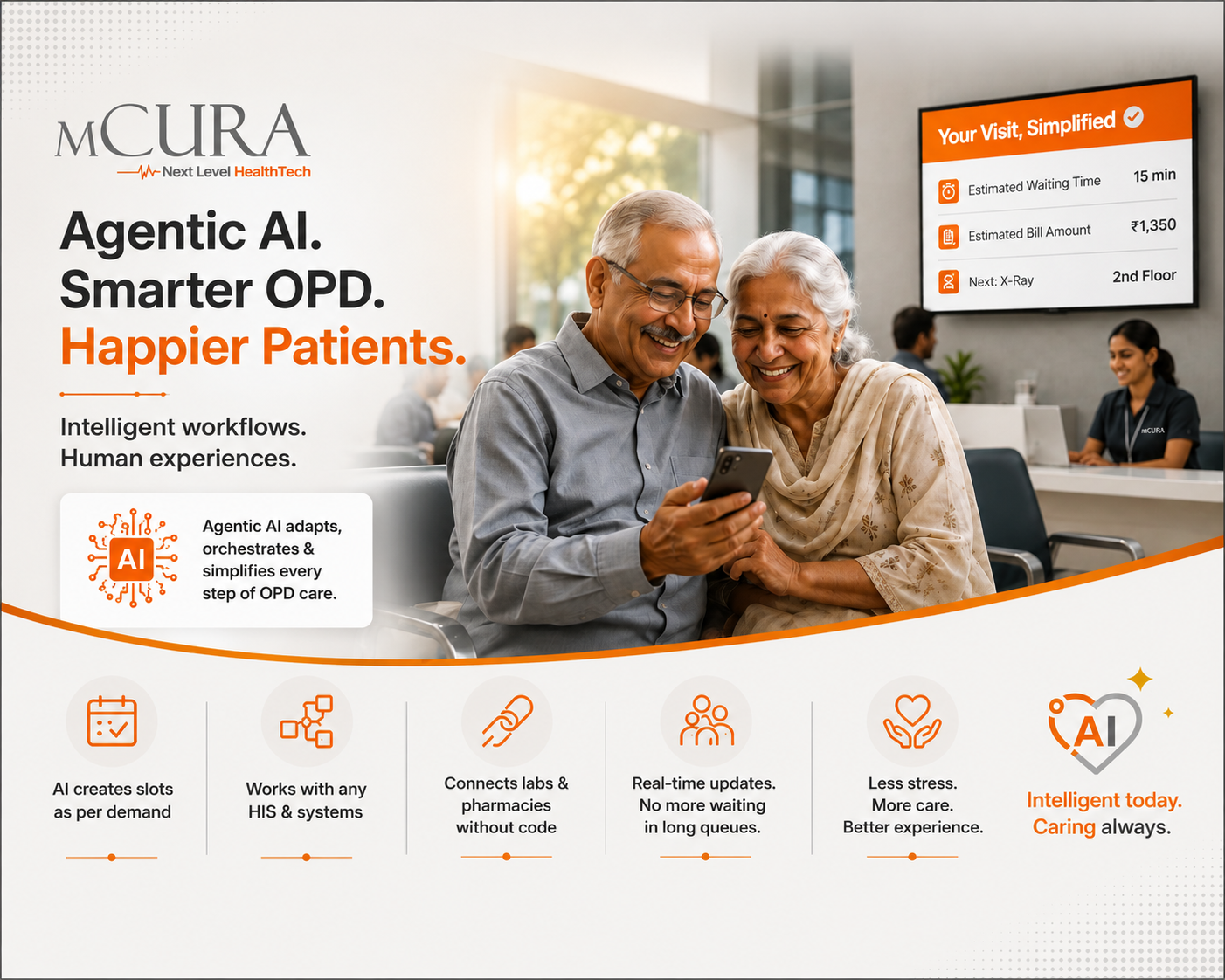
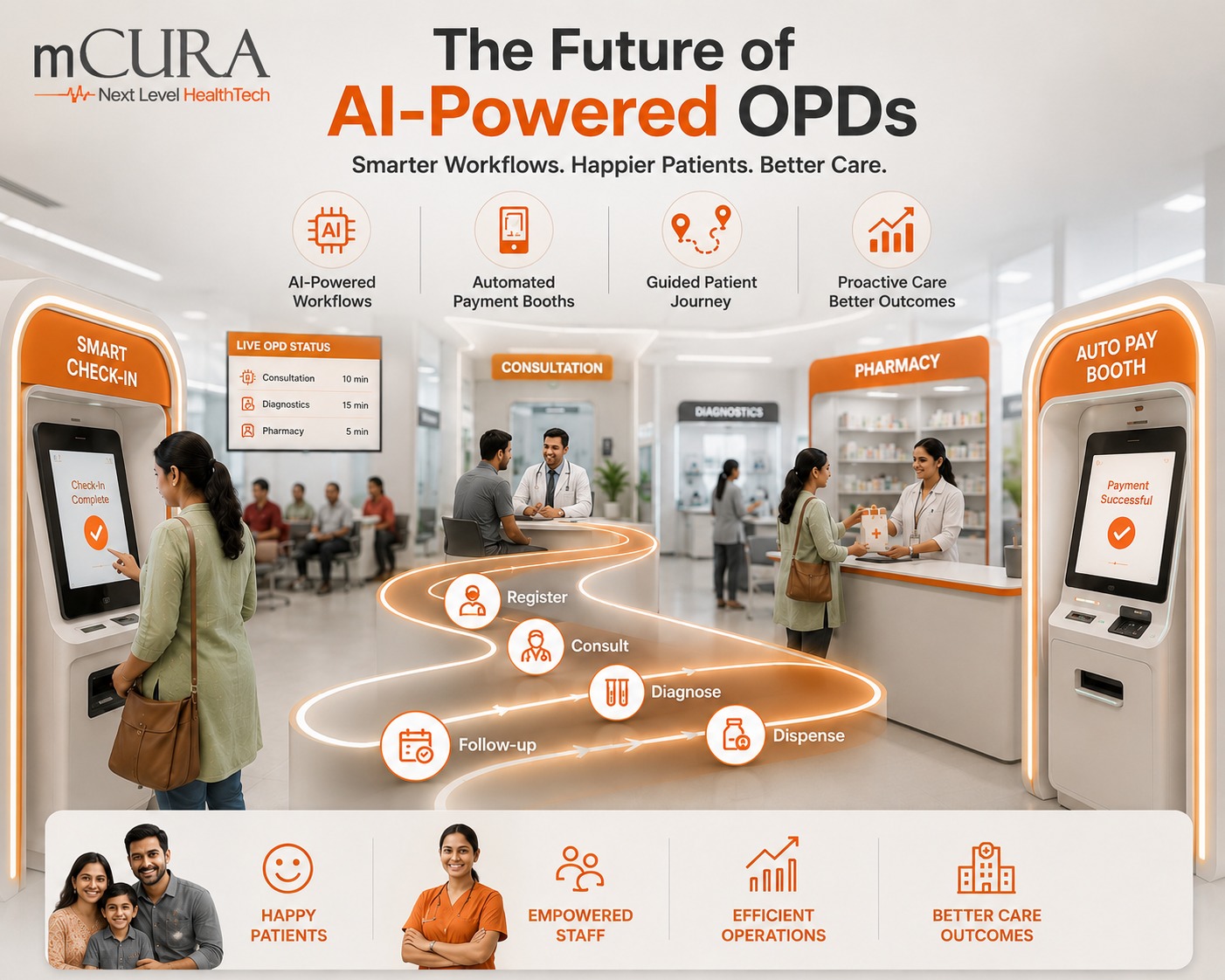
Agentic AI addresses these issues by transforming unstructured conversations into structured digital records. It helps doctors document consultations faster, maintain complete patient histories, and keep workflows connected across OPD visits, prescriptions, diagnostics, pharmacy interactions, and follow-ups.
By automating documentation and organizing patient information intelligently, hospitals can improve patient safety, enhance operational efficiency, and ensure better continuity of care.
With mCURA's Agentic AI-powered Smart OPD, healthcare organizations can move beyond chat-based care and deliver safer, smarter, and more connected patient experiences while maintaining complete visibility across the patient journey.