Difference Between HIS Software and Managed Care OPD Operations
For many hospital CIOs and administrators, the frustration is becoming increasingly familiar.
The HIS server slows down during peak OPD hours. Billing queues suddenly stop because of synchronization delays. Pharmacy teams struggle because medicine stock visibility is not updated in real time. Diagnostics workflows remain disconnected. Front office staff manually coordinate patients between multiple systems while doctors continue waiting for smoother execution.
Despite years of investment in hospital digitization, operational bottlenecks continue to affect both patient experience and staff efficiency.
This is where hospitals are beginning to recognize the difference between traditional HIS software and Managed Care OPD Operations.
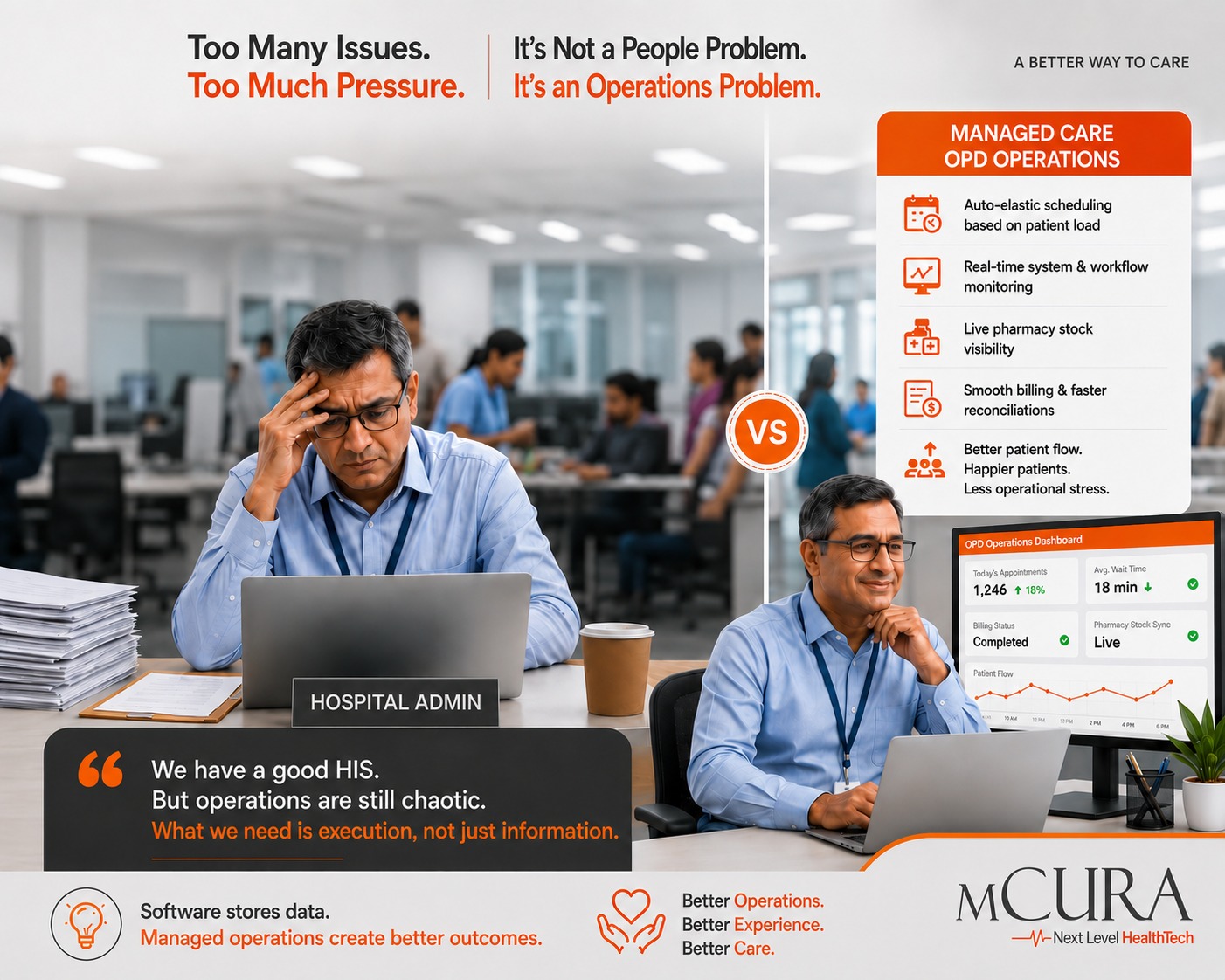
Beyond Digitization: The Need for Operational Intelligence
Hospital Information Systems (HIS) are designed primarily to digitize records, billing, registrations and clinical documentation. They form the digital backbone of modern hospitals.
But OPD operations involve much more than storing information.
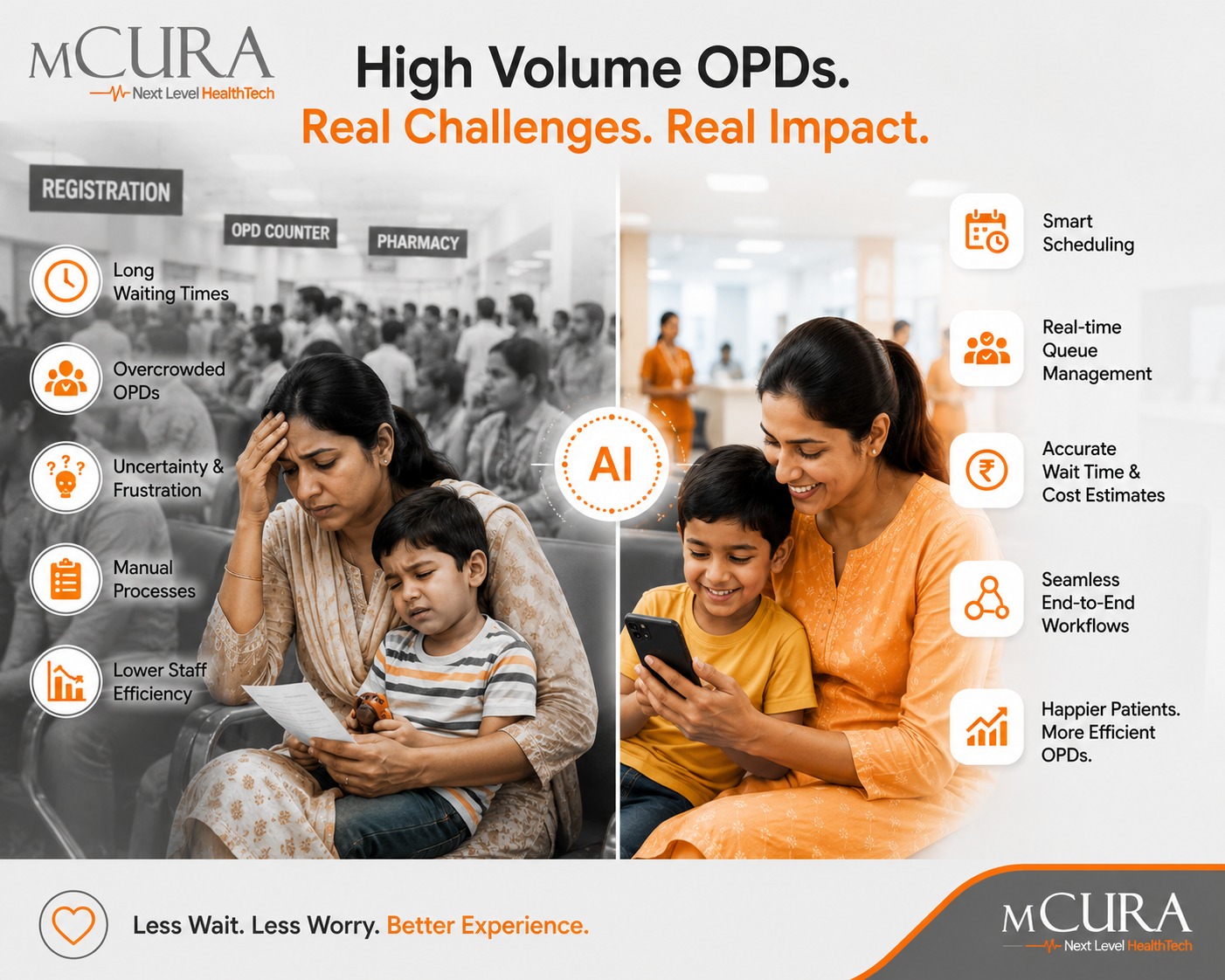
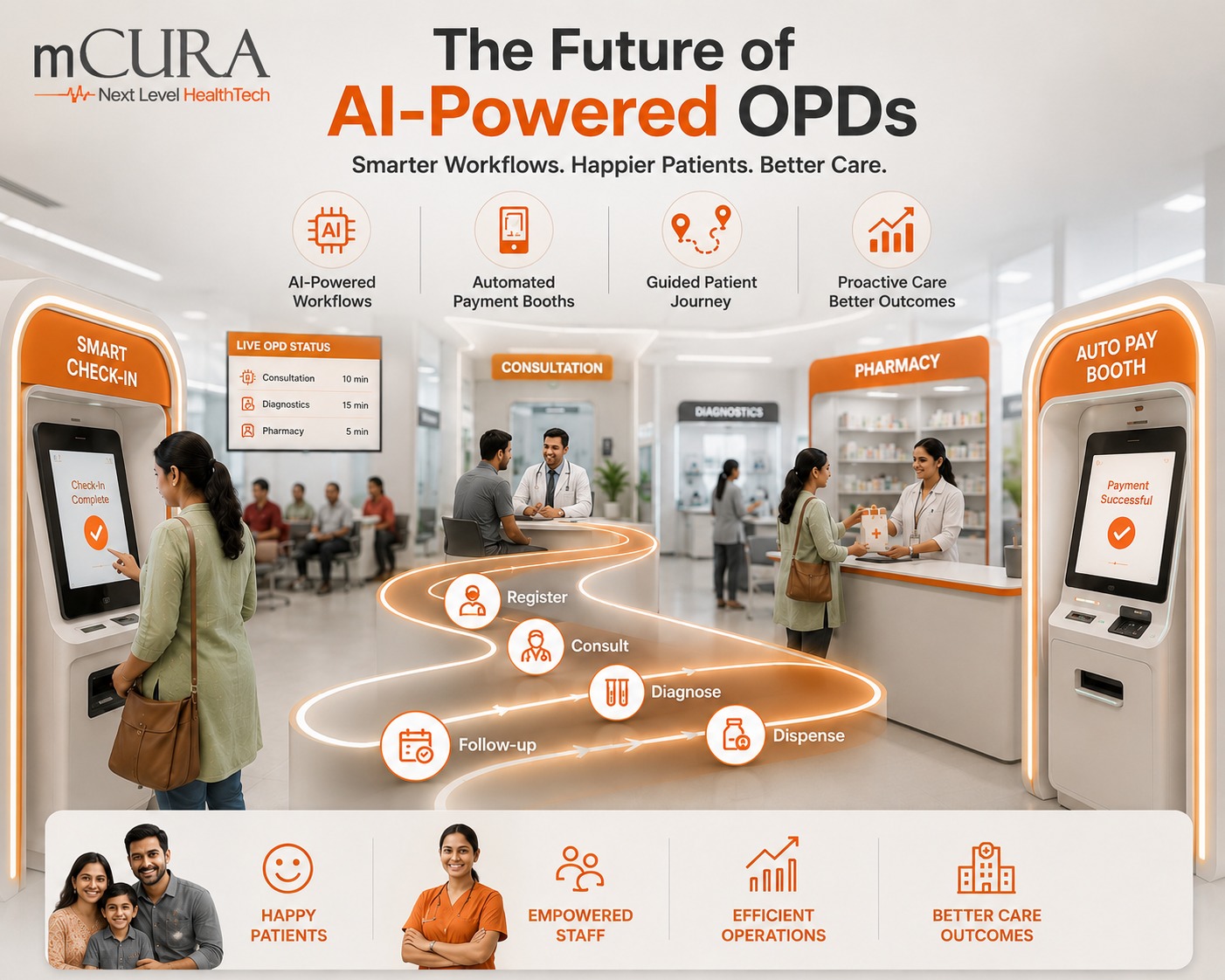
High-volume OPDs require continuous workflow coordination across appointments, queues, pharmacy, diagnostics, consultations, billing and patient movement — all in real time.
- Real-time appointment and queue management
- Connected workflows across diagnostics and pharmacy
- Operational visibility across departments
- Reduced manual coordination for staff
- Improved patient flow and care experience
Managed Care OPD Operations introduce an intelligent operational layer on top of existing hospital systems.
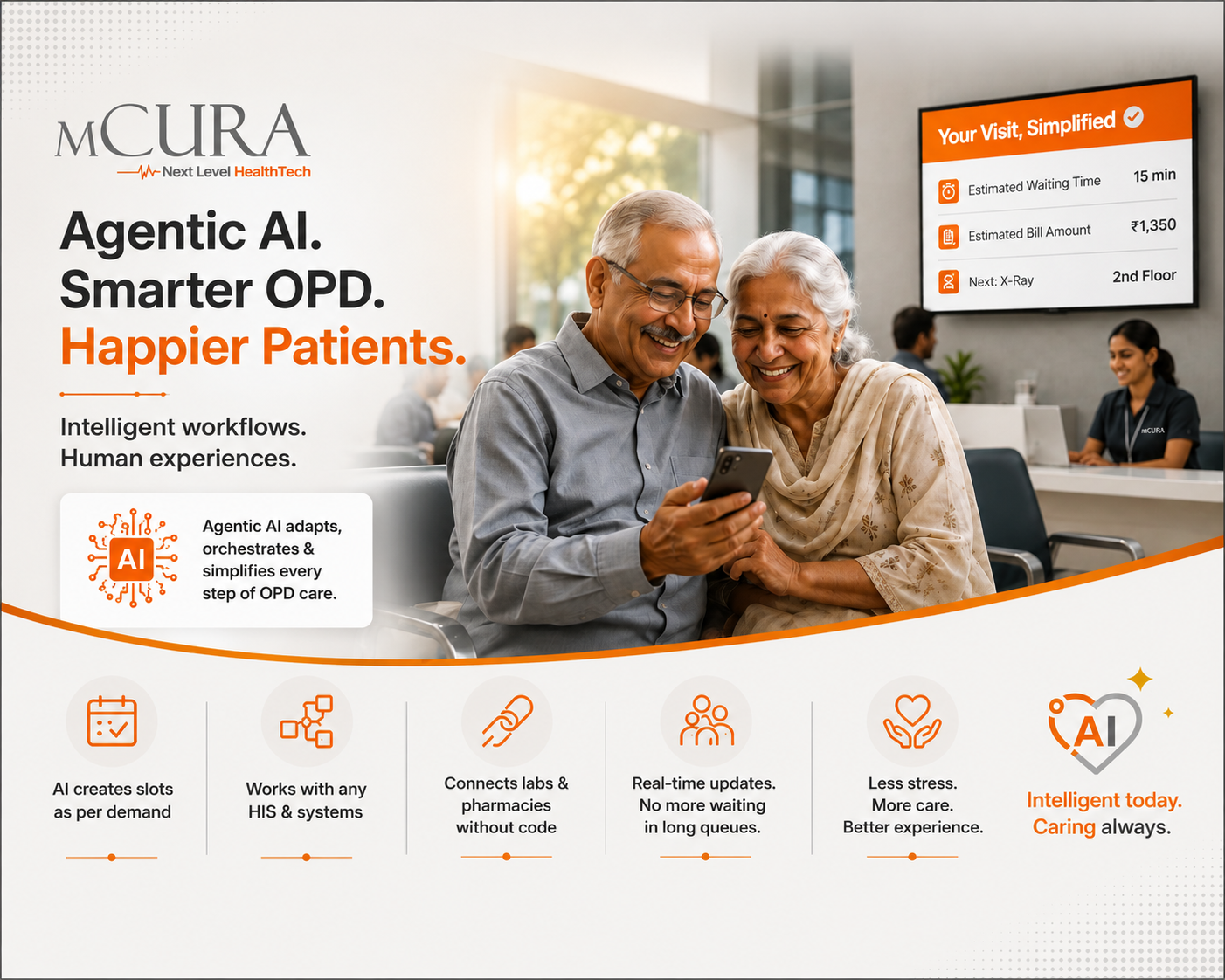
Instead of replacing HIS infrastructure, modern Agentic AI-powered operational models help hospitals orchestrate workflows dynamically, create auto-elastic consultation slots during peak load, provide real-time queue visibility and connect fragmented third-party systems even when APIs are unavailable.
For hospital staff, this reduces operational stress and repetitive coordination efforts.
For CIOs, it helps improve workflow continuity without requiring major changes to existing systems.
And for patients, it creates a smoother, more predictable healthcare journey with better visibility into waiting times, billing estimates and care coordination.
Because the future of hospital OPDs is no longer only about digitization.
It is about intelligent operational execution.