Challenges of Managing High-Volume Hospital OPDs
Every crowded hospital OPD tells a silent story.
An elderly couple waiting anxiously for their turn. A mother carrying a restless child between consultation rooms and diagnostics counters. Doctors trying to manage overwhelming patient volumes while balancing clinical care with endless administrative tasks.
For many hospitals today, managing high-volume OPDs has become one of the biggest operational challenges in healthcare.
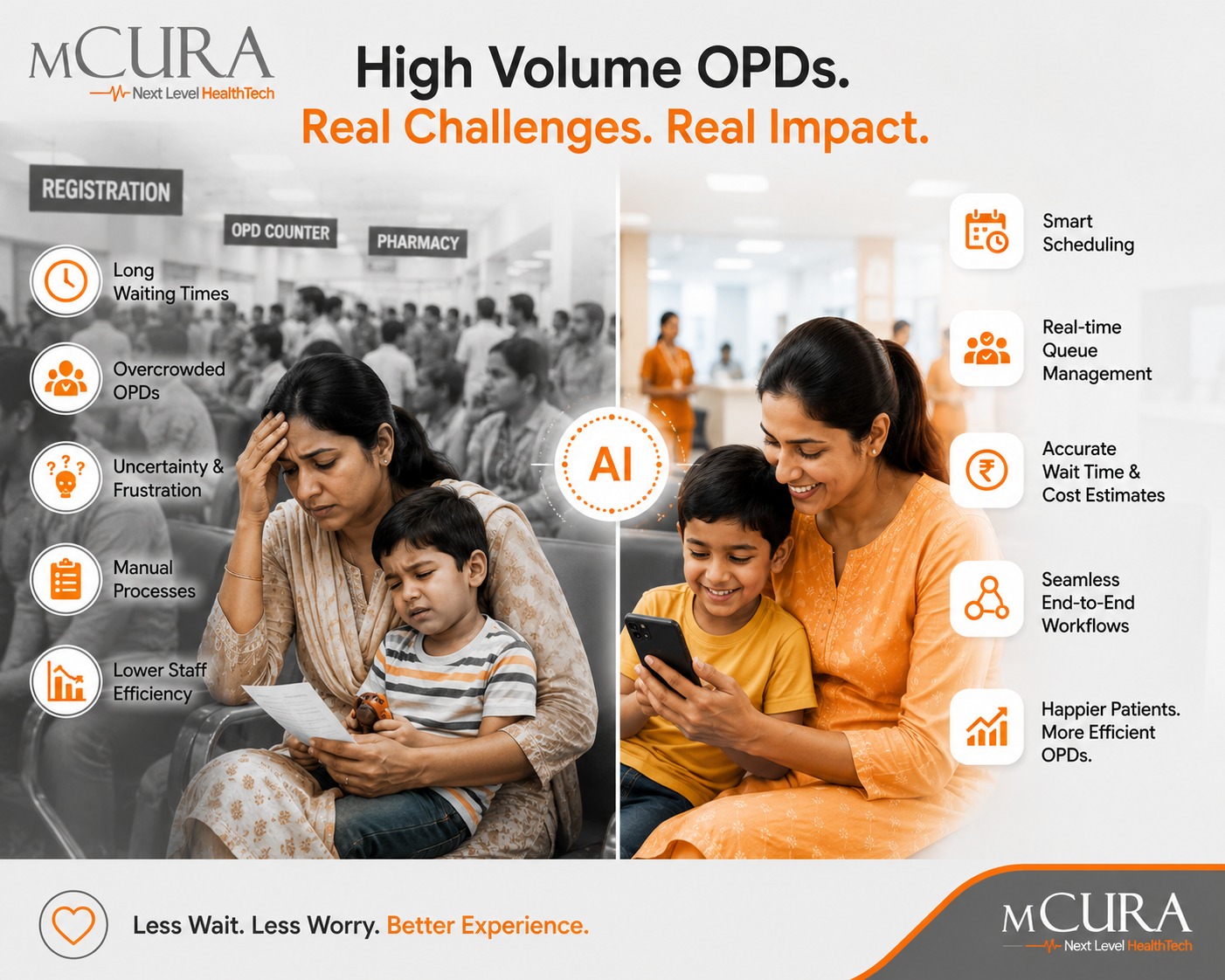
As patient footfall increases, traditional OPD workflows often struggle to keep pace. Long waiting times, overcrowded queues, fragmented communication between departments and delayed coordination between billing, diagnostics, pharmacy and consultation counters directly impact patient experience.
But the pressure is not only on patients.
Doctors and hospital staff are increasingly burdened by operational inefficiencies, repetitive documentation and workflow disruptions that reduce valuable consultation time.
Why Traditional OPD Workflows Struggle
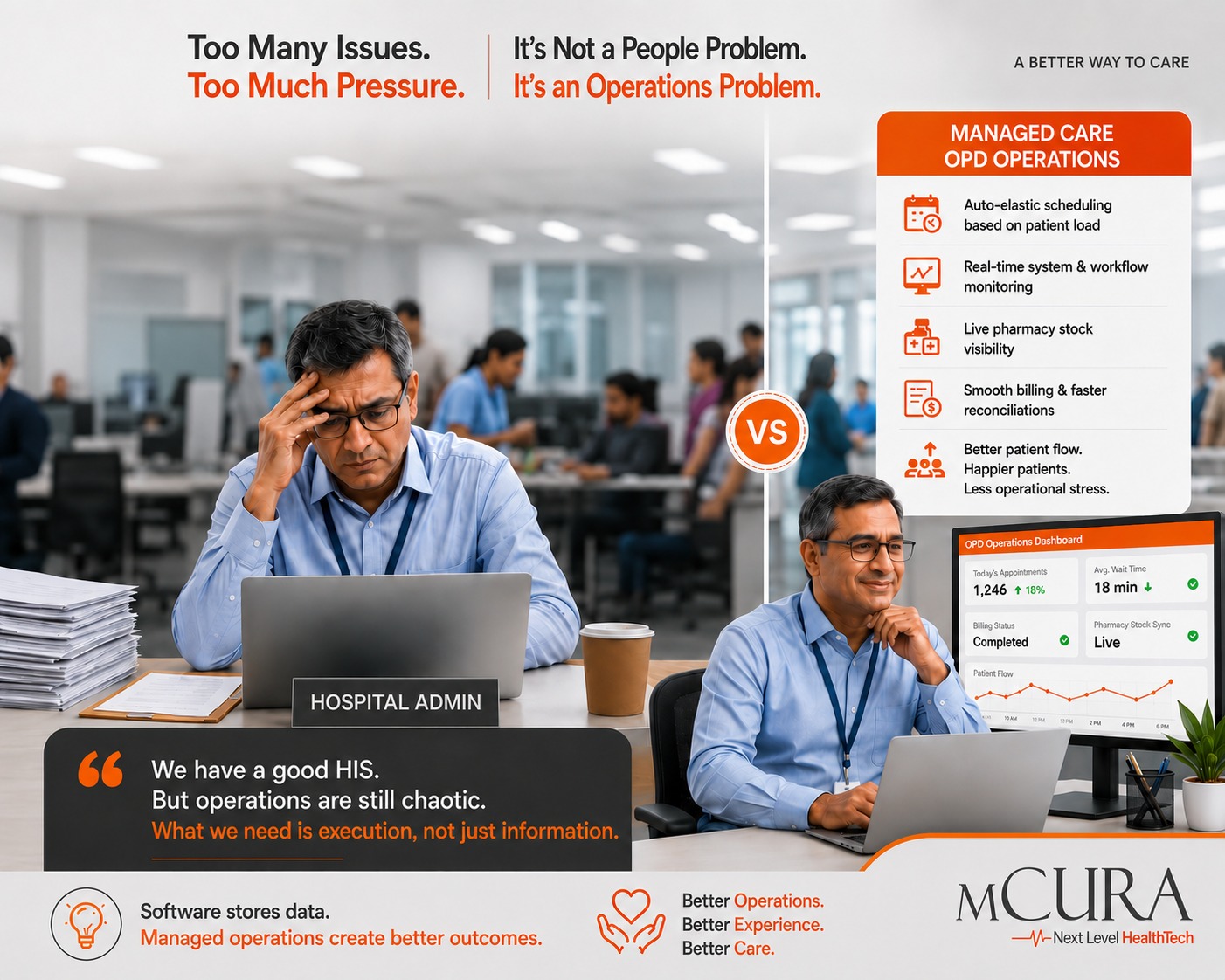
Many hospitals invested heavily in Hospital Information Systems (HIS) and digital transformation initiatives. Yet operational bottlenecks continue to persist because healthcare workflows involve far more than software alone.
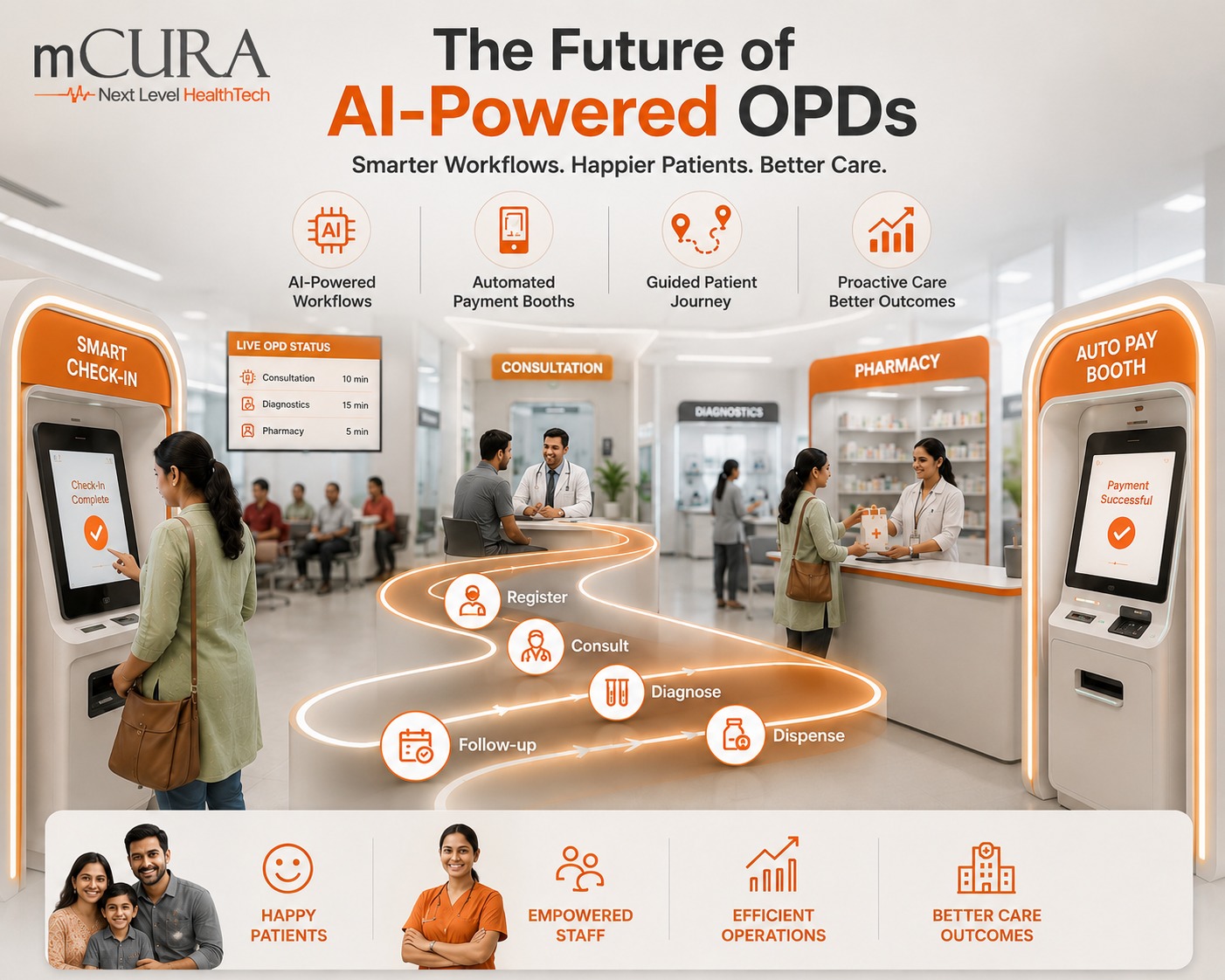
Modern OPD management now requires intelligent coordination across appointments, queue management, diagnostics routing, pharmacy workflows, billing estimates and real-time patient movement.
- Long patient waiting times
- Overcrowded queues and bottlenecks
- Fragmented communication across departments
- Increased administrative burden on staff
- Limited visibility into patient flow and operations
In high-volume hospitals, even small delays can create cascading operational pressure throughout the day.
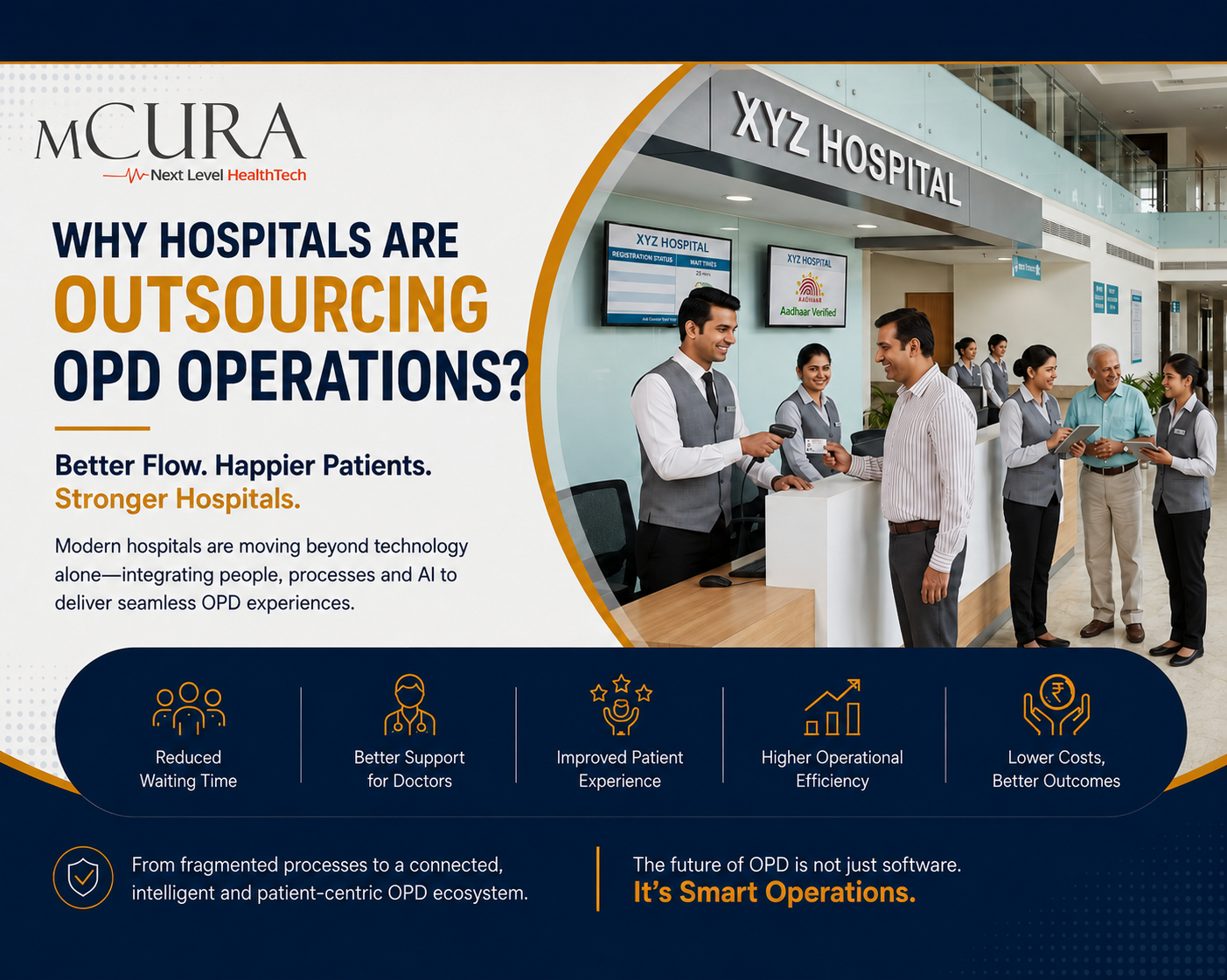
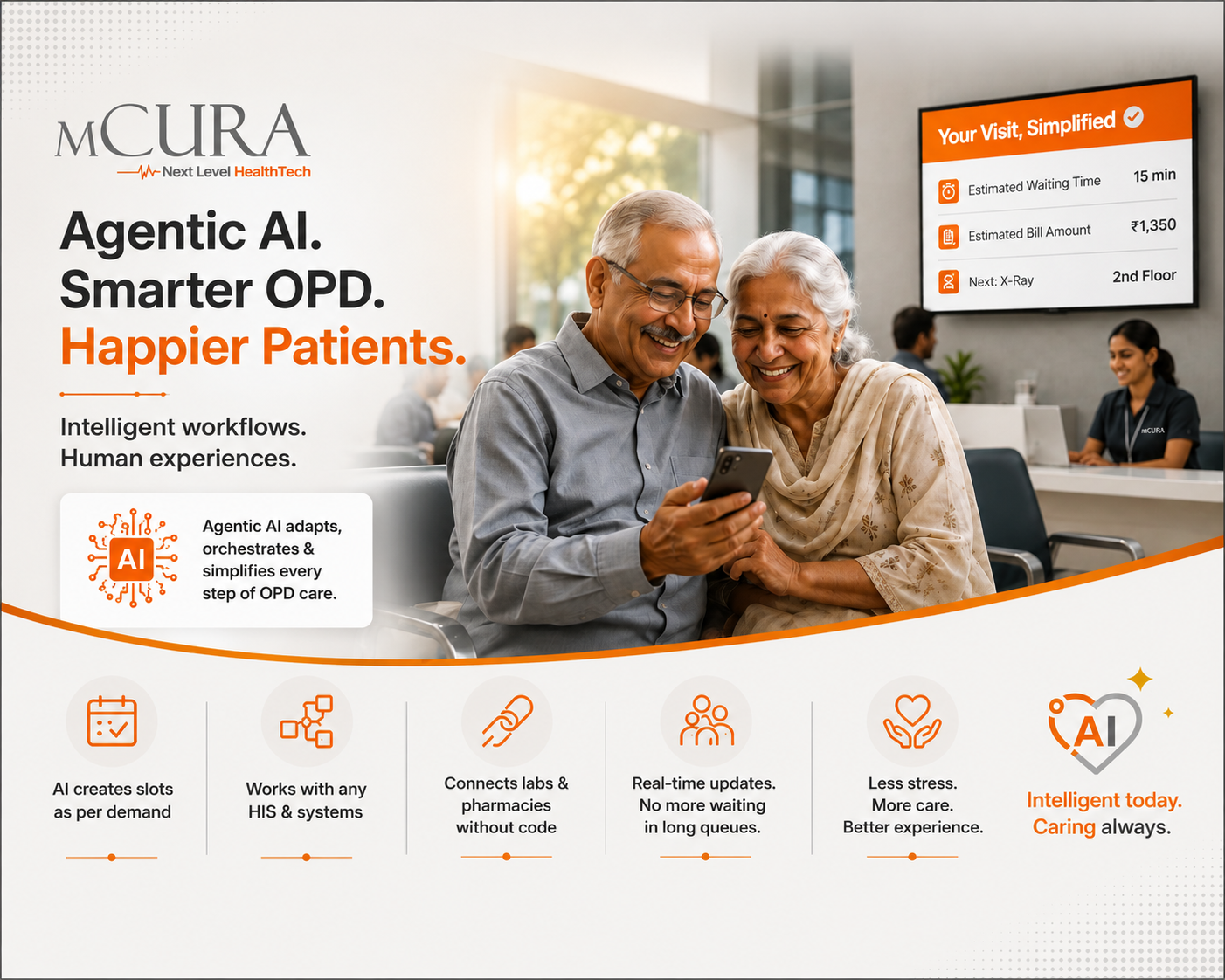
This is why hospitals are increasingly exploring AI-powered OPD workflow automation, smart queue management and connected operational ecosystems that help reduce waiting times, improve patient flow and support clinical teams more efficiently.
Patients today expect healthcare experiences that are faster, more transparent and less stressful. Hospitals, in turn, are looking for ways to improve operational efficiency without compromising quality of care.
Because in healthcare, operational delays are never just operational problems.
They become human experiences.
And the future of high-volume hospital OPDs will depend on how intelligently hospitals combine technology, workflow execution and patient-centric operational design.